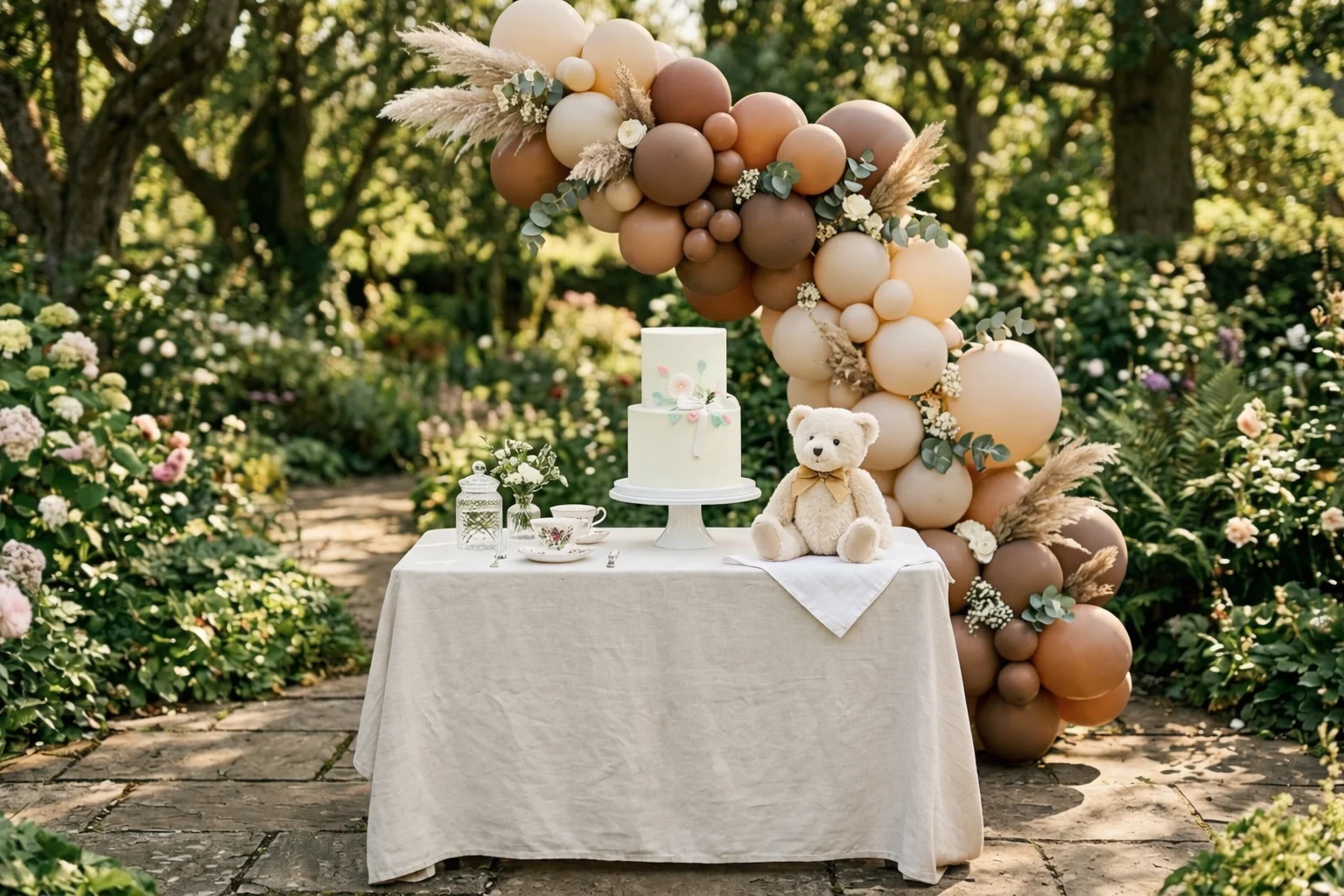
Yes — you can absolutely have balloons at an outdoor party in the UK. The short answer is that the right type of display, set up correctly, works beautifully outside. The longer answer is that outdoor conditions require more thought than an indoor setup, and a few simple choices make the difference between a display that lasts the whole event and one that causes problems before the guests arrive.
This guide covers everything you need to know: what the weather actually does to balloons, which types of display work best outside, how to secure them, and how long you can realistically expect them to last on a sunny summer day in Kent.
The Three Outdoor Challenges
Balloons outdoors face three things they do not deal with indoors: wind, heat and UV. Understanding each helps you plan around them.
Wind
Wind is the biggest practical challenge. Individual floating balloons become unpredictable in anything above a gentle breeze — they pull, tangle, and can escape entirely. A secured garland on a weighted frame behaves far better because the balloons are anchored to each other and to a structure rather than floating freely.
Heat and Direct Sun
Direct sunlight degrades latex faster than any other factor. The air or helium inside expands as the balloon heats up, stressing the latex and increasing the risk of popping. On a hot day above 25°C, an over-inflated balloon in full sun can pop within a few hours. The fix is simple: inflate slightly below full capacity for outdoor use, and position displays in dappled shade where possible.
Rain
Light rain is not a serious problem for latex or foil balloons — they are not damaged by water. The real issue is that heavy rain, particularly with wind, makes any outdoor display look bedraggled quickly. For garden parties, having a contingency plan to move the display under a gazebo or marquee side is worth thinking about in advance.
Latex vs Foil Outdoors
| Type | Outdoor Performance | Lifespan Outside | Best Use |
|---|---|---|---|
| Air-filled latex garland | Excellent when secured | 6–12 hours in sun; longer in shade | Arches, garlands on frames |
| Helium latex balloons | Fair — affected by heat and wind | 8–12 hours in warm conditions | Weighted table clusters |
| Foil balloons | Good — less porous than latex | 1–3 days outdoors | Letter balloons, feature foils |
| Bubble balloons | Good — strong and less sun-sensitive | Several days outdoors | Weighted feature balloons |
Air-filled latex in a garland is the most reliable outdoor choice. It does not depend on helium, stays in position, and is not affected by changes in air pressure. Foil balloons last longer in direct sun because they reflect rather than absorb heat, but they act like sails in wind and must be properly weighted or anchored.
Air-Filled vs Helium Outdoors
For outdoor use, air-filled displays are almost always the better choice. Here is why:
- They stay where you put them. An air-filled garland attached to a frame does not drift, pull or float away.
- Heat affects them less. Helium expands faster than air when heated, which means helium balloons over-pressurise and pop more readily in direct sun.
- They last longer. Air-filled latex balloons last significantly longer than helium-filled ones in warm outdoor conditions.
- They are not affected by altitude or air pressure changes. Relevant for hilly garden venues or high-sided marquees where airflow varies.
Does Outdoor Mean No Helium at All?
Not necessarily. Helium-filled foil balloons weighted on the table — letter balloons spelling a name, for example — work well outdoors if they are anchored. The key is that helium floating balloons should never be left untethered outdoors. Secure everything to a weight, a table or a structure.
Which Displays Work Best Outside
Works Well Outdoors
- Organic garland on a weighted freestanding frame
- Balloon arch on a weighted base
- Weighted table balloon clusters
- Foil letter balloons on balloon weights
- Garland attached to a fence, pergola or gazebo
Avoid Outdoors
- Untethered helium floating balloons
- Large single foil balloons in exposed positions
- Lightweight frames without ballast
- Balloon displays in direct sun all day
- Over-inflated balloons in hot weather
The organic balloon garland on a freestanding frame is the outdoor workhorse. It gives you the visual impact of a large display without the vulnerabilities of individual floating balloons. The frame can be positioned to face any direction, moved if conditions change, and weighted as heavily as needed for stability. For a full explanation of how garlands work, see our guide to what an organic balloon garland is.
How to Secure Balloons Outdoors
Securing outdoor balloon displays is different from indoor setup. You cannot rely on walls, tape or ceiling points. Here is what works:
Freestanding Frames
A balloon arch or garland frame with a weighted base is the most versatile outdoor solution. The base should be filled with water or sand for outdoor use — a weight that is adequate indoors may not be sufficient against even a light breeze. As a guide, each upright of a freestanding frame should have at least 5 to 8 kg of ballast outdoors.
Attaching to Existing Structures
Pergolas, gazebo frames, fence panels and marquee poles are excellent anchor points for garlands. Use zip ties or floral wire rather than tape — tape loses adhesion outdoors, particularly if the surface is warm or damp.
Table Balloon Weights
For table clusters and individual foil balloons, use purpose-made balloon weights or improvise with a small bag of sand or pebbles inside a decorative container. A weight suitable for indoors is roughly half of what you need outdoors in any breeze.
Important: Never release balloons into the sky. Released balloons cause environmental harm and litter. All balloon displays should be secured, retrieved and disposed of responsibly after the event. For more on this, see our guide to latex balloon safety.
How Long Do Balloons Last Outdoors?
| Conditions | Air-filled Latex Garland | Helium Latex | Foil |
|---|---|---|---|
| Cool, overcast UK day | 12–24+ hours | 12–18 hours | 2–4 days |
| Warm, sunny (20–25°C) | 8–12 hours | 8–12 hours | 1–2 days |
| Hot day in direct sun (25°C+) | 4–8 hours | 4–8 hours | 12–24 hours |
| Shaded position, any temperature | 12–20 hours | 10–16 hours | 2–3 days |
For a full breakdown of balloon longevity indoors and out, see our dedicated guide on how long balloons last.
What Weather Is Too Bad?
As a practical guide for UK outdoor events:
- Light breeze (under 15 mph): Fine for secured displays. Floating individual balloons will drift but stay manageable with weights.
- Moderate breeze (15–20 mph): Garlands on frames are fine if properly weighted. Avoid individual floating balloons.
- Fresh breeze (20–28 mph): Only secured garlands attached to solid structures are reliable. Freestanding frames may need additional ballast or guying.
- Above 28 mph (strong breeze or more): Outdoor balloon displays become impractical. Move to a sheltered position or postpone the balloon element.
Check the Met Office forecast for your venue the morning of the event. In Kent, summer garden parties are typically fine — sustained winds above 20 mph during the peak party season (May to September) are relatively unusual, though not unknown.
The Shade Rule
Position your display so it is in shade during the hottest part of the day — typically 11am to 3pm. Even dappled shade under a tree significantly extends balloon life and reduces popping. A display that would last four hours in direct July sun can easily last all day in partial shade.
Your Questions Answered
Can you use a balloon garland outdoors?
Yes — an air-filled organic balloon garland on a weighted freestanding frame is the most reliable outdoor balloon display available. It stays in position, does not depend on helium, and can be moved if conditions change. Attach it to an existing structure (pergola, gazebo, fence) for maximum stability. See our guide to organic balloon garlands for more detail.
Will balloons pop in the sun?
They can, particularly on hot days above 25°C. Heat causes the air inside to expand and stresses the latex. The fix is to inflate balloons slightly below full capacity for outdoor summer use, and to position displays in shade during the hottest part of the day. Foil balloons are significantly more resistant to popping in sun because they reflect rather than absorb heat.
How long do balloons last outside in the UK?
On a typical warm UK summer day, an air-filled latex garland looks its best for 8 to 12 hours. In shade or on a cooler overcast day, expect 12 to 24 hours. For events where the display needs to look perfect all day, set it up as close to the start time as practical and position it out of direct afternoon sun.
Do I need special balloons for an outdoor party?
No special balloon type is required, but the setup matters more than indoors. Use air-filled rather than helium where possible, inflate slightly below full capacity, secure everything to a weighted frame or structure, and avoid positioning in full sun. A professional installer will account for all of this automatically as part of the setup.
Outdoor balloon styling in Kent works beautifully for garden parties, marquee events, baby showers and summer birthdays — the key is choosing the right type of display and setting it up correctly for the conditions. A well-secured air-filled garland will look stunning from setup to the last guest leaving, whatever the British summer decides to do.
Planning an Outdoor Celebration in Kent?
Little Moment Studio creates balloon displays for outdoor parties, garden events and marquee celebrations across Sittingbourne and Kent. We handle setup and take down, and we know how to make outdoor styling work in any conditions.